

War pressure helps new helium producers
Australia is waking up to the fact it is facing a growing helium squeeze, with hospitals, chipmakers and fibre optic manufacturers at the mercy of the Iran war.
The issue, which Gold Hydrogen has been concerned about for months, has been the subject of significant articles in both The Australian and Australian Financial Review in recent days as the scale of the problem becomes clearer.
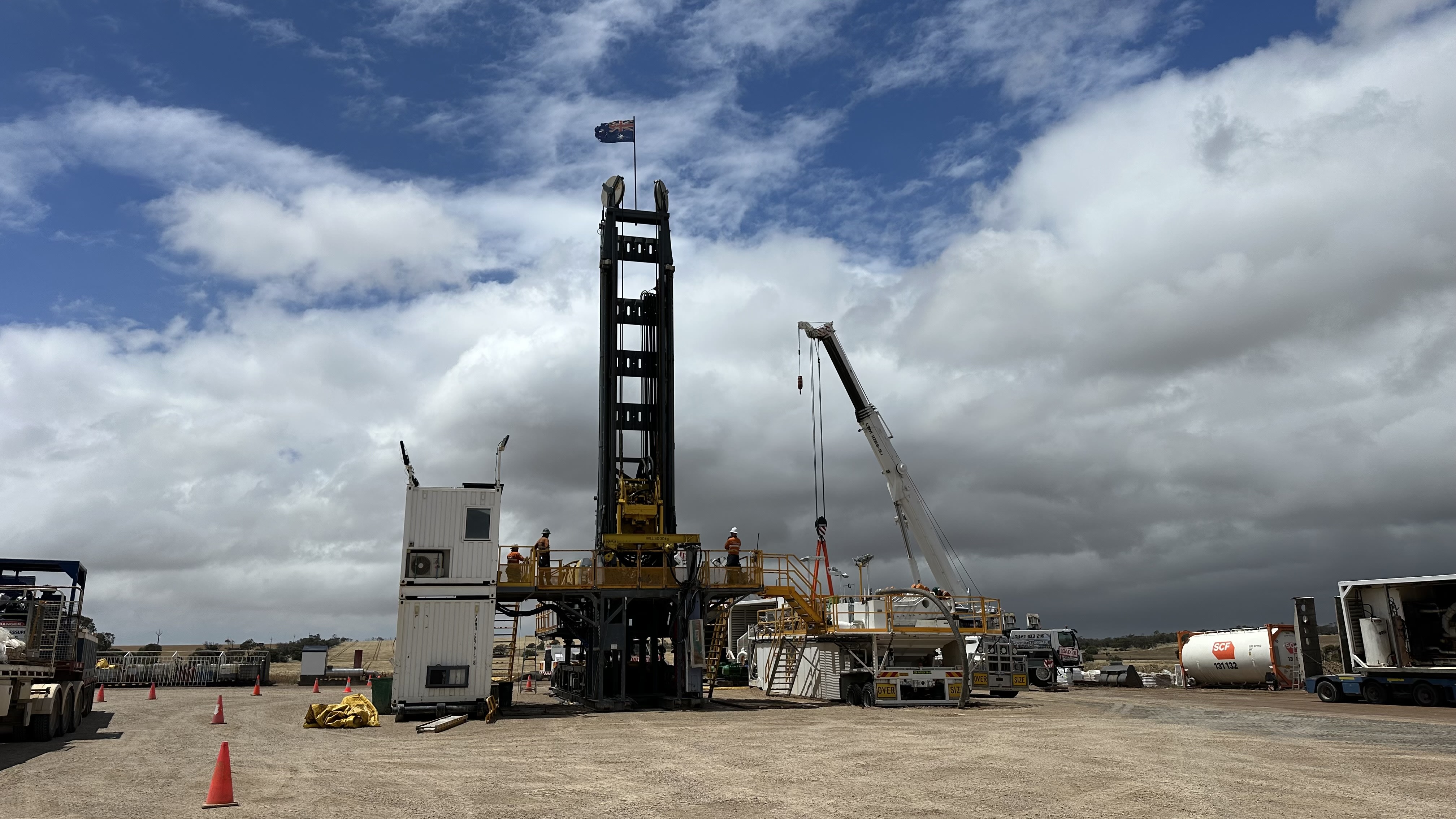
Ramsay 3 in South Australia just before the commencement of drilling.
The massive Ras Laffan site in Qatar, which accounts for between 20-30% of the world’s helium as a by-product of LNG production, has been bombed by Iran and its operation will be crimped for years. Already it’s been reported customers are receiving force majeure notices from QatarEnergy because of their inability to supply LNG.
Helium prices have spiked up to 200% in some markets.
This spells bad news for Australia, which produces no helium and is reliant on imports.
As The Australian said this week: "While politicians obsess over petrol prices and fuel security, helium has quietly slipped through the cracks despite it underpinning critical services across healthcare, advanced manufacturing and science. The stakes are high: there are few substitutes, and when supply tightens, access is rationed."
Helium cools superconducting magnets inside MRI machines, allowing high-resolution medical imaging. It is also indispensable in chipmaking, fibre optic production and advanced research.
The Australian reported our key suppliers, Linde and Air Liquide, draw mainly from Qatar and the US.
"For policymakers focused on supply chain resilience, helium is an invisible vulnerability hiding in plain sight."
Full article here.
The AFR’s coverage highlighted upside for helium producers outside the Middle East, focussing on a new helium producer in Colorado (US) whose product became indispensable overnight.
The AFR story can be found here.
With Gold Hydrogen having found elevated levels of helium (at up to 36.9 per cent, one of the highest recorded in the world), as well as natural hydrogen, on our South Australian tenement, the price rises are intriguing as we head into a key round of drilling in coming months.
Our potential was noted by Stockhead in its coverage of the helium crisis. An article – ‘Iranian conflict highlights helium chokepoints, here’s who has solutions to the problem’ – listed Gold Hydrogen one of few to have potential assets in this country. Article here.
Gold Hydrogen managing director Neil McDonald said the helium risks were real and it reinforced why Australia needed to reconsider what it considered critical minerals. Helium is not on Australia’s list of most important elements.
Meanwhile, calls grow for the US to add helium back on to its critical minerals list, after it removed it in 2022.
Industry experts Akap Energy said the US decision was "based on government data that materially overstated US helium exports and understated supply risk".
In calling for helium to go back on the critical minerals list, it said: "With one‑third of global helium supply now disrupted, the consequences of that decision are no longer theoretical."
As a critical mineral, helium would attract access to federal funding and R&D grants, streamlined permitting and better investment priorities.
"Helium’s exclusion from the list ensures helium projects will not benefit from these pathways. We believe that it is a short-sighted and ignorant decision, especially after the numerous comments from large industry players who explicitly stated the dire need to have helium on the critical mineral list and ensure stability in supply chains across industries," Akap said.
Its opinion can be read here.
0
likes
•
0
questions
•
0
company answers
Ask a question
Your question will be sent privately to Gold Hydrogen. The company may choose to make this question public.
Investor Q&As
Start the conversation
Ask Gold Hydrogen a question about this update.